RICS Level 3 Building Survey: The Complete Guide for South London Buyers
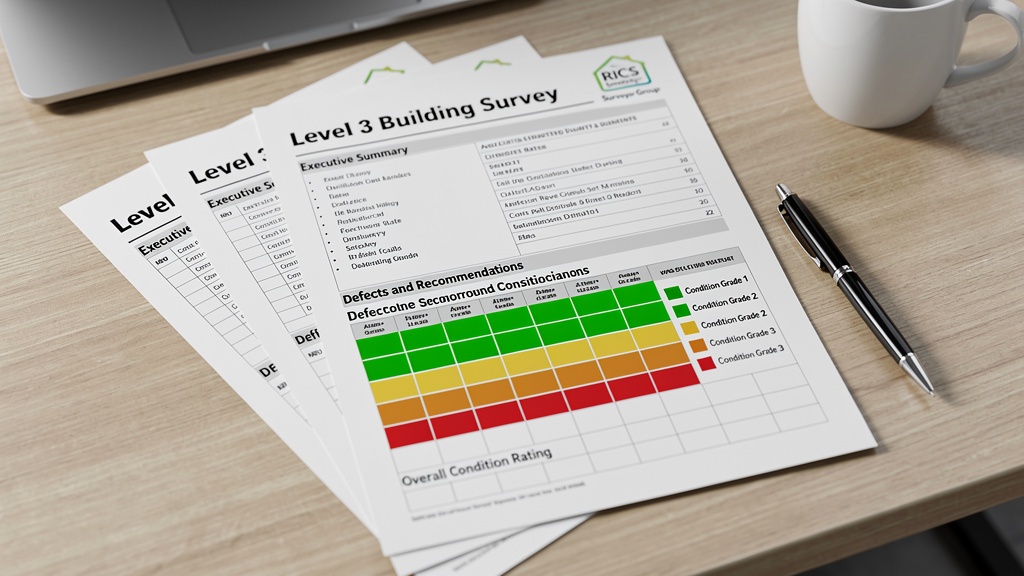
Brixton Surveyors produce more Level 3 Building Surveys in South London than any other type of report. If you are buying a Victorian terrace, a converted warehouse, or any property over 80 years old, a Level 3 survey is not a luxury — it is essential. This guide tells you exactly what to expect, what we look for, and how the report can protect your investment.
Quick Summary
- Best for: Victorian and Edwardian houses, unusual builds, properties with visible defects
- Depth: Most thorough residential survey available
- Cost: £600–£1,500 in South London
- Includes: Defect cause analysis, repair recommendations, cost guidance, legal matters
What Is a RICS Level 3 Building Survey?
The RICS Level 3 Building Survey (formerly known as a Structural Survey or Full Building Survey) is the most comprehensive residential survey RICS offers. Unlike a Level 2 HomeBuyer Survey, which records visible defects in a standardised traffic-light format, a Level 3 goes much deeper: it describes the form of construction, analyses the cause of defects, and sets out a clear programme of repairs with estimated costs.
As principal surveyor at Brixton Surveyors, I've inspected hundreds of Victorian terraces in Lambeth, Southwark, and Wandsworth. Each property tells a story — of previous owners' decisions, local ground conditions, maintenance choices, and the slow march of time. A Level 3 report translates that story into clear, actionable intelligence for buyers.
Level 1 vs Level 2 vs Level 3: Which Survey Do You Need?
| Survey Type | Best For | Depth | Includes Valuation? |
|---|---|---|---|
| Level 1 Condition Report | New-build, post-1990 in good condition | Basic overview | No |
| Level 2 HomeBuyer Survey | Conventional homes, post-1900, reasonable condition | Visible defects, traffic-light ratings | Optional add-on |
| Level 3 Building Survey ✓ Most thorough | Victorian/Edwardian, older, unusual, or defective property | Cause of defects, repair recommendations, cost guidance | Optional add-on |
What Does a Level 3 Survey Cover?
Our Level 3 reports follow the RICS Home Survey Standard and cover the following elements of the building:
Structural Elements
- Foundations: Evidence of differential settlement, subsidence, or heave, particularly relevant in Brixton where clay soils create movement risk near large trees.
- External walls: Crack patterns, tie failure in cavity walls, spalled brickwork, repointing quality, and evidence of previous repairs.
- Roof structure: Condition of timbers (including evidence of beetle infestation or rot), rafter spread, ridge line deflection, and party wall junctions.
- Internal floors: Deflection, bounce, evidence of damp ingress at ground level, and adequacy of sub-floor ventilation.
- Internal walls and ceilings: Settlement cracks vs. shrinkage cracks, plasterwork condition, evidence of water penetration.
Damp and Water Ingress
We use electronic damp meters calibrated to timber to check all accessible walls at low level, around windows and doors, and in cellars. We distinguish between rising damp (rare), penetrating damp (common in Victorian brickwork), condensation, and plumbing leaks. Each has a different cause and a different solution — and they require different budgets.
Roof Covering
From the eaves or with binoculars (and drones where accessible), we assess the condition of slates, tiles, leadwork, parapet walls, chimney stacks, gutters, and downpipes. Roofing is often the single most expensive element in a survey — a full re-roof on a Brixton terrace typically costs £8,000–£18,000.
Drainage
We observe drainage from gutters and downpipes, assess gully conditions, and flag any evidence of blocked or cracked drains from surface water patterns. A CCTV drain survey can be commissioned separately if we identify risk indicators.
Services
We provide a general overview of visible electrical, plumbing, and heating installations and note when specialist tests are recommended. We do not test services directly but can arrange specialist inspections as part of an integrated due-diligence package.
Outbuildings, Boundaries, and Site
Garden structures, boundary walls, paths, and drainage patios are all assessed. We note any risks from overhanging trees, encroachments, and the condition of shared party walls.
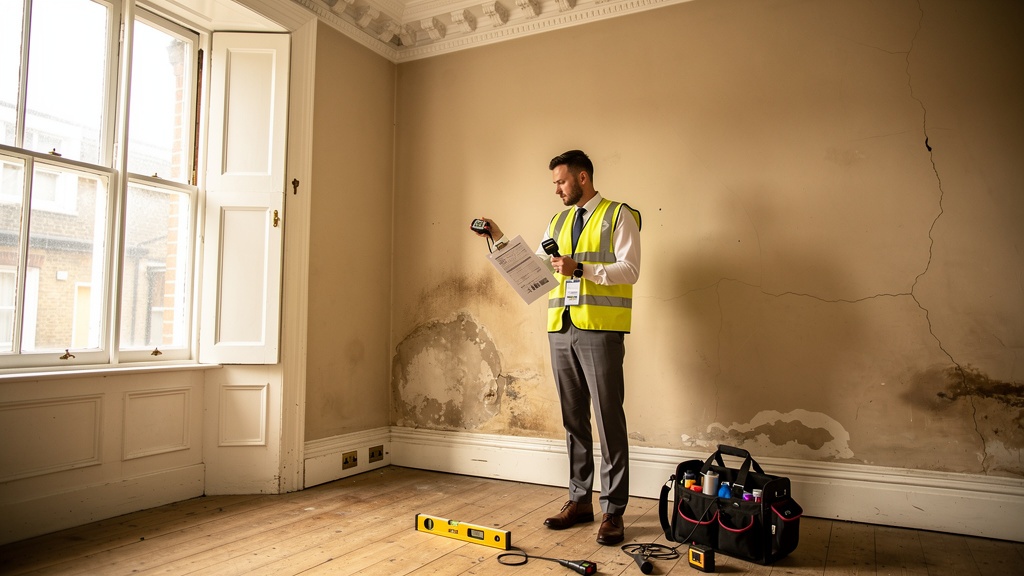
Understanding Condition Ratings
Every element in a Level 3 report is assigned one of three condition ratings:
No repair is currently needed. The property must be maintained in the normal way.
Defects that need repairing or replacing but are not considered to be either serious or urgent.
Defects that are serious and/or require urgent repair, replacement, or professional specialist investigation.
Importantly, a Condition 3 rating does not mean you should walk away from a purchase. It means you need more information — a specialist's report, a contractor's quote — and potentially a price reduction. Our surveyors always discuss findings with clients before they make any decisions.
Case Study: Victorian Terrace in Streatham Hill — The Hidden Cost
In autumn 2023 I surveyed a three-bedroom Victorian mid-terrace in Streatham Hill, SW16. The property had been beautifully decorated and staged. The estate agent's description made no mention of any issues. The sellers had lived there for six years.
During the Level 3 inspection I found:
- Active penetrating damp through the rear bay window — caused by failed render around the window frame (estimated repair: £1,200–£1,800)
- Significant deflection in the ground-floor joists at the rear — caused by inadequate sub-floor ventilation and localised rot (estimated repair: £3,500–£6,000)
- Evidence of lateral movement in the rear outrigger wall — consistent with shallow foundation movement over a period of decades (recommend specialist structural engineer's report, estimated repair range: £8,000–£25,000)
- Roof structure showing signs of rafter spread at the ridge — needs monitoring and potentially tie rods (estimated repair: £2,500–£4,000)
Total mid-range estimated repair cost: approximately £20,000–£37,000. My client used the Level 3 report to renegotiate the purchase price down by £22,000. He bought the property, had the works done, and now lives there happily — but he went in with eyes open.
What a Level 3 Survey Does NOT Include
It is important to understand the limitations of any building survey. A Level 3 does not include:
- Opening up of floors, walls, or ceilings (destructive investigation)
- Electrical testing (recommend EICR report from a registered electrician)
- Gas safety certification (recommend annual gas safe certificate)
- Drainage CCTV inspection (can be arranged separately)
- Asbestos testing (can be arranged if suspected materials are found)
- Japanese knotweed identification below ground (laboratory testing required)
- Structural calculations or engineering design
Our reports are clear about what has been inspected, under what conditions, and what limitations apply. We never leave a client uncertain about the scope of what they've commissioned.
How to Use Your Level 3 Report
Once you receive your report, you have several options depending on the findings:
- No significant defects: Proceed with confidence. Use the maintenance guidance to protect your investment over time.
- Amber defects only: Obtain contractor quotes, budget for works, and factor costs into your offer if appropriate.
- Red defects present: Commission the recommended specialist reports (structural engineer, drainage survey, asbestos survey) before exchanging contracts. Use the findings to negotiate.
- Major concerns: Ask your surveyor to walk you through the findings in a follow-up call. Consider whether the property represents good value at the agreed price and whether you're comfortable with the risk profile.
Frequently Asked Questions: Level 3 Building Surveys
What is the difference between a Level 2 and Level 3 survey?
A Level 2 HomeBuyer Survey is designed for conventional, well-maintained properties built after 1900. A Level 3 Building Survey is more in-depth, describes the form of construction in detail, identifies defects and their causes, and provides repair recommendations with cost guidance. Level 3 is recommended for older, extended, or altered properties.
How much does a Level 3 Building Survey cost in South London?
A Level 3 Building Survey in South London typically costs between £600 and £1,500, depending on the property's size, age, and complexity. Victorian terraced houses in Brixton usually fall in the £700–£950 range.
How long does a Level 3 survey take?
The on-site inspection typically takes 3–6 hours for an average Victorian terrace, and up to a full day for larger or more complex properties. The report is usually delivered within 5–7 working days.
Does a Level 3 survey include a valuation?
A standard Level 3 Building Survey does not include a market valuation. However, you can request that your surveyor include one for an additional fee, or commission a separate RICS Red Book valuation simultaneously.
Can a Level 3 survey help me negotiate the purchase price?
Absolutely. A detailed Level 3 report with repair cost estimates gives you a strong, evidence-based foundation for price renegotiation. We regularly help buyers in Brixton save between £5,000 and £40,000 off asking prices by presenting defect evidence to sellers.
What does Condition Rating 3 mean?
Condition Rating 3 (red) means defects of a serious nature that are either urgent or require significant expenditure to repair. This does not necessarily mean you shouldn't buy the property, but you should get specialist quotes and factor the cost into your offer.
Why Trust Brixton Surveyors for Your Level 3 Survey?
Our team has inspected thousands of Victorian and Edwardian properties across Lambeth, Southwark, and Wandsworth. We know the common defect patterns — clay shrinkage cracks, failed lintels over rear extensions, slate slippage on mansard roofs — and we know how to distinguish the serious from the cosmetic.
Every Level 3 report we produce includes our direct contact details and a free post-report consultation call. You'll never receive a lengthy document full of jargon and be left to figure it out alone. Our job is to make sure you fully understand what you're buying.
Book a Level 3 Building Survey in South London
Get a transparent, fixed-price quote from our RICS-accredited surveyors. Fast turnaround, plain-English reports, and a free consultation call included.
Request Your Free Quote